
Original Research Publication
Caffeine Can Improve Subjective Sleep Satisfaction Among Adolescents
Abstract
Sleep profoundly affects the human body, including cognitive and physical functioning and brain development. Using real-world survey data from 151 high school students across 22 schools in the Greater Boston area, this study investigates the relationship between subjective sleep satisfaction and various sleep habits, with a focus on caffeine consumption.
Multivariate regression analyses identified weekday sleep duration, subjective sleep restfulness, and caffeine consumption as significant predictors of subjective sleep satisfaction. In particular, caffeine intake was positively associated with sleep satisfaction, a finding contrary to prior literature that mostly identifies caffeine as a disruptor to sleep. This counterintuitive result can be explained through the effects of stimulants on daytime alertness and eventual sleep pressure buildup. These highlight the complex relationship between caffeine and sleep, and call for longitudinal studies to clarify this potential and meaningful relationship with greater rigor.
Original Research Publication (in process)
Longer Sleep on The Weekends Makes You Feel Less Rested Upon Waking
Abstract
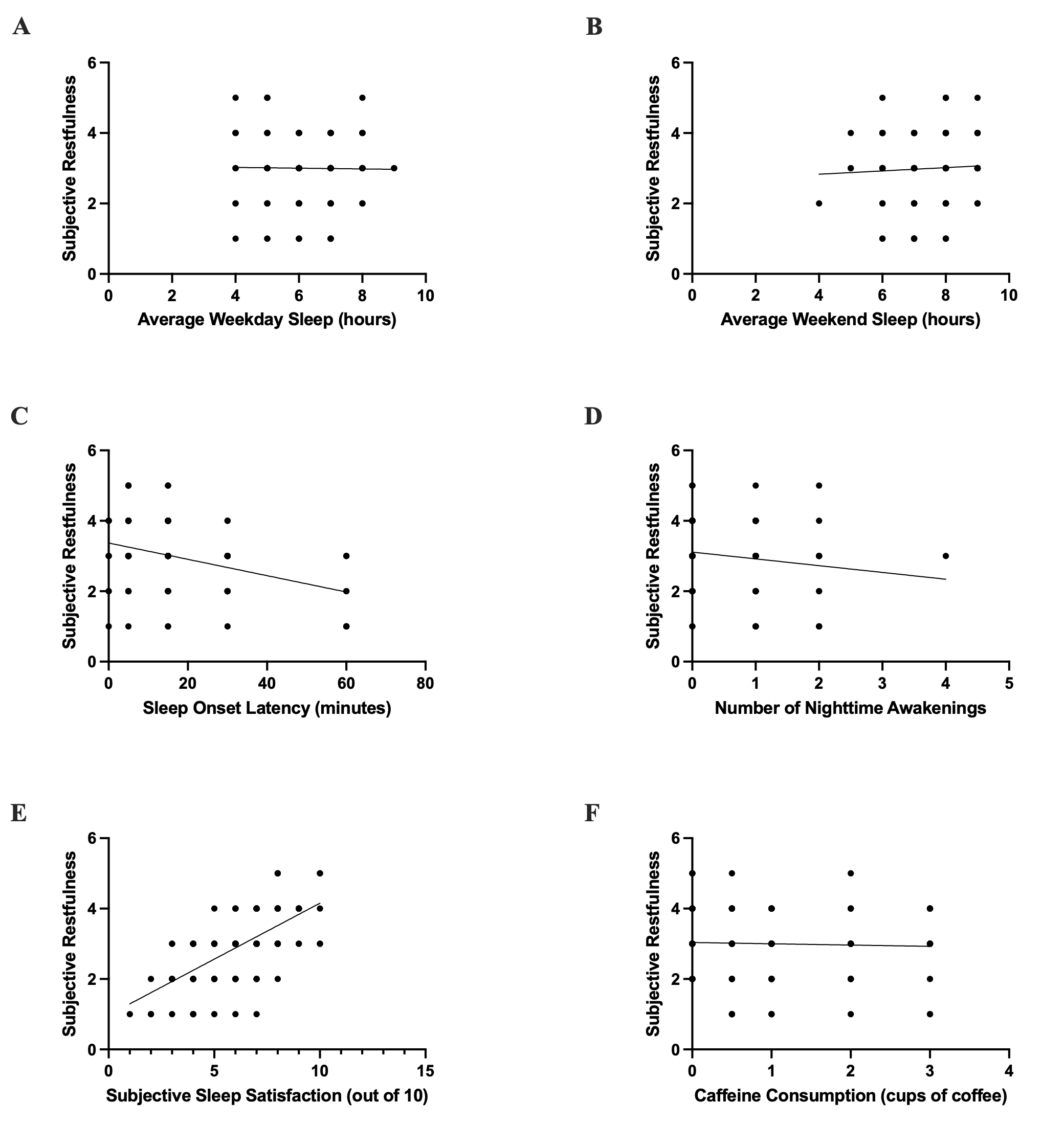
Simple regressions showed that subjective restfulness upon waking was associated with shorter sleep onset latency and higher sleep satisfaction (both p < 0.0001; R² = 0.1484 and 0.4115, respectively). A multivariable model including weekday/weekend sleep duration, sleep onset latency, nighttime awakenings, sleep satisfaction, caffeine use, and the wake–school interval was significant overall (p < 0.0001; adjusted R² = 0.4444). Within this model, longer weekend sleep duration and longer sleep onset latency predicted lower restfulness (p = 0.0209 and p = 0.0161), whereas higher sleep satisfaction predicted greater restfulness (p < 0.0001). These results suggest that “catch-up” weekend sleep and difficulty initiating sleep may blunt morning restfulness, warranting longitudinal studies with objective measures to clarify directionality.