To advance the CBT-I project, I interviewed CBT-I providers across the nation to understand delivery, impact, and feasibility in schools. These interviews shaped my approach to design, timelines, and recommendations for accessibility.
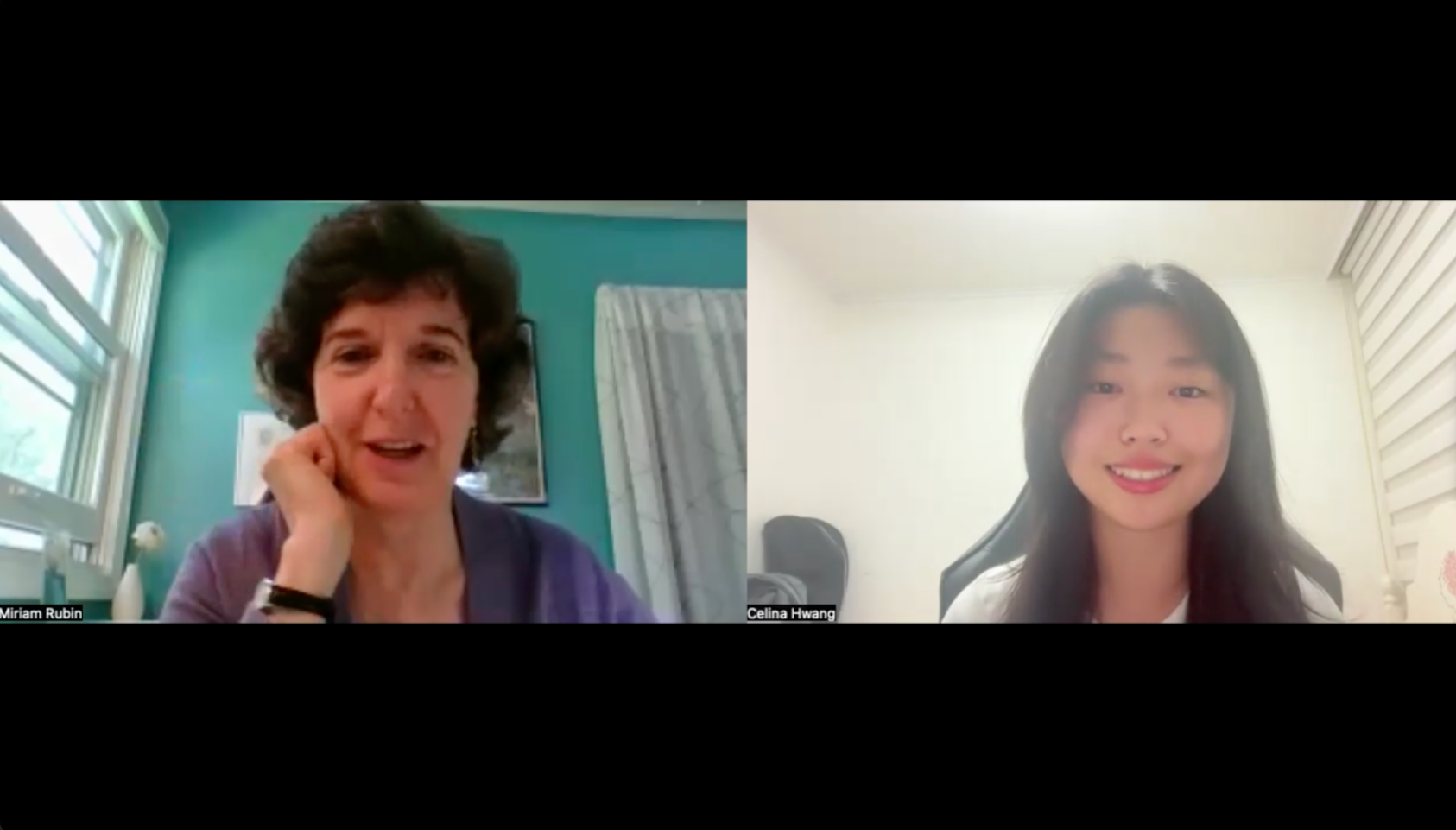
Dr. Miriam Rubin
Board-Certified Behavioral Sleep Specialist & Clinical Psychologist | Integrative Psychology | Arlington, Massachusetts
Key Insights from
Dr. Miriam Rubin
● Digital CBT-I Tools
Some apps alert users to contact a provider when sleep efficiency drops too low. Dr. Rubin emphasized that digital tools should complement, not replace, clinicians by linking users to support when needed.
● Group vs. Individual CBT-I
Group sessions often boost focus, accountability, and motivation via peer progress. Dr. Rubin noted that shared experiences build hope; even initially reluctant participants engage after hearing others improve.
● Additional Insights
Dr. Rubin highlighted that CBT-I is a gateway to further mental health interventions. Framing sleep as universal and approachable reduces stigma and encourages help-seeking.
Dr. Michelle Jonelis
Sleep and Lifestyle Medicine Physician | Lifestyle Sleep | Mill Valley, California
Key Insights from
Dr. Michelle Jonells
● Effectiveness of CBT-I for Adolescents
CBT-I is highly effective, though optimal protocols are still being refined. The main challenge is sustaining teen motivation and engagement. Meeting adolescents where they are—and tailoring the approach—matters.
● Feasibility of Group-Based CBT-I in Schools
Group CBT-I is realistic and research-supported.
Ideal format: 60-minute sessions once or twice weekly for 6–8 sessions.
Possible variations: four 30-minute sessions (minimum) to eight 2-hour sessions (maximum).
● Program Evaluation & Research Design
Dr. Jonelis recommended using an RCT: randomize schools to sleep education, digital CBT-I, or group CBT-I, and measure outcomes with the Insomnia Severity Index (ISI), wearable sleep data (actigraphy/Fitbit/Oura), sleep diaries, and general well-being/mental-health metrics.
Dr. Andrea Roth
Licensed Psychologist | Thriving Minds Behavioral Health | Livonia, Michigan
Key Insights from
Dr. Andrea Roth
● Format & Delivery
Dr. Roth described group-based CBT-I in schools as realistic and effective—“the audience is captive.” She recommended sessions every two weeks to allow students time to apply techniques. Digital CBT-I broadens access but can compromise treatment fidelity; students with mental or medical comorbidities may benefit more from individual CBT-I.
● Effectiveness for Adolescents
CBT-I is as effective for teens as for adults, though outcomes can be harder to achieve because of lower compliance and more confounding factors.
● Key Components to Preserve
Motivational Interviewing (MI) is essential and should never be removed—even in digital or group formats. MI helps students surface their own reasons for change, strengthening intrinsic motivation to adopt and sustain better sleep habits.
Dr. Jessica Weatherford
CBT-I Specialist | Catalyst Psychology | Newton, Massachusetts
Key Insights from
Dr. Jessica Weatherford
● Challenges in School Adaptation
The main challenge is sustaining adherence. Dr. Weatherford cautioned that sleep restriction/compression may be inappropriate for teens with limited sleep opportunity; in districts with later start times, carefully applied restriction can still help.
● Engaging Adolescents & Reducing Stigma
Most teens don’t perceive stigma; many normalize poor sleep. To build engagement, she recommended:
A brief sleep-science lecture
Sharing evidence on behavior change and sleep gains
Behavioral experiments, such as screen-free week, fixed wake time, for quick, tangible results
● When Individual CBT-I Is Indicated
Teens with significant psychiatric comorbidities (e.g., bipolar I, severe anxiety, OCD, major depression) should receive individual CBT-I. If a student struggles to engage in group, transition to 1:1 therapy.