
Original Research Publication
Caffeine Can Improve Subjective Sleep Satisfaction Among Adolescents
Abstract
Sleep profoundly affects the human body, including cognitive and physical functioning and brain development. Using real-world survey data from 151 high school students across 22 schools in the Greater Boston area, this study investigates the relationship between subjective sleep satisfaction and various sleep habits, with a focus on caffeine consumption.
Multivariate regression analyses identified weekday sleep duration, subjective sleep restfulness, and caffeine consumption as significant predictors of subjective sleep satisfaction. In particular, caffeine intake was positively associated with sleep satisfaction, a finding contrary to prior literature that mostly identifies caffeine as a disruptor to sleep. This counterintuitive result can be explained through the effects of stimulants on daytime alertness and eventual sleep pressure buildup. These highlight the complex relationship between caffeine and sleep, and call for longitudinal studies to clarify this potential and meaningful relationship with greater rigor.
Original Research Publication
Longer Weekend Sleep Weakens Restfulness Upon Waking Among Adolescents
Abstract
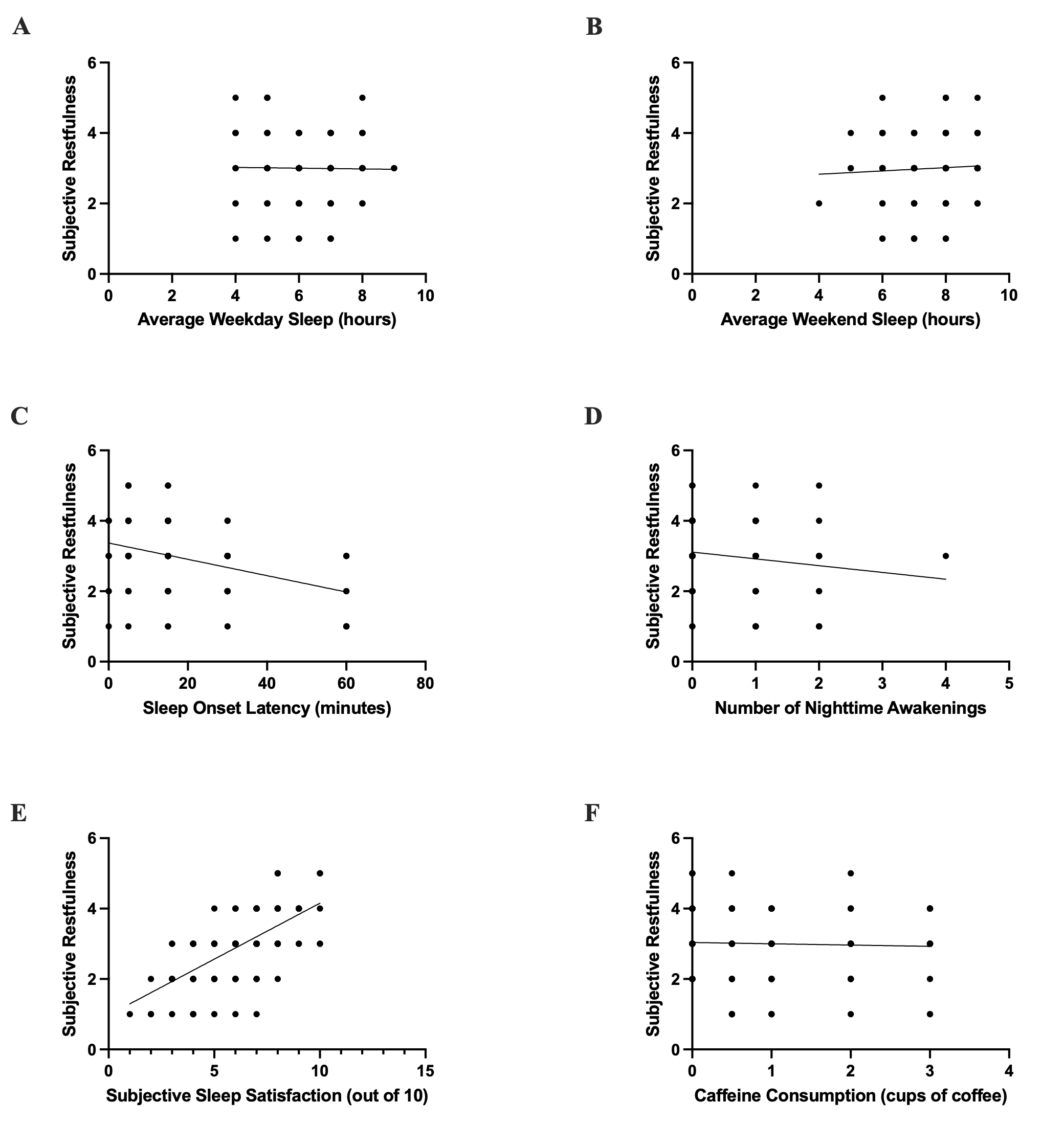
Adolescent sleep deficit is a growing public health concern that is associated not only with adolescents’ physical and mental health but also with academic performance and social relationships. This study examined how different sleep habits influence subjective sleep restfulness upon waking, using real-world survey data from 151 high school students in the Greater Boston area. The multivariate regression model identified statistically significant associations between subjective restfulness and weekend sleep duration, sleep onset latency, and subjective sleep satisfaction. The negative association between weekend sleep duration and restfulness highlights the prevalence of social jetlag and weekend “catch-up sleep” among adolescents, and that they may reduce how rested adolescents feel upon waking. This finding suggests that longer sleep duration does not necessarily lead to improved restfulness and may rather signify poor sleep habits. Overall, the results of the study call for further research into the specific mechanisms through which social jetlag and prolonged sleep onset latency may weaken subjective restfulness.